
Invisalign costs typically range from $3,000 to $8,000, depending on factors like treatment complexity and location. Payment plans can help you manage expenses, with options for low or zero interest financing available. Don't forget to check your dental insurance for coverage and inquire about potential discounts from your orthodontist. This investment not only enhances your smile but also promotes better oral health. Discovering additional insights on financing and affordability strategies can further assist you in making informed decisions.
Summary Point
- Invisalign treatment costs typically range from $3,000 to $8,000, influenced by case complexity and location.
- Complex cases require more aligners, increasing overall costs and treatment duration.
- Monthly payment plans and financing options, including interest-free plans, can help manage expenses.
- Insurance may cover parts of the treatment; check your plan for specifics and inquire about discounts.
- Investing in Invisalign not only improves your smile but also enhances confidence and oral health.
Understanding the Cost of Invisalign

When considering orthodontic options, understanding the cost of Invisalign is essential for many patients.
Clear aligners provide an effective alternative to traditional braces, but their pricing can vary widely. Typically, you can expect to invest between $3,000 and $8,000, contingent upon the complexity of your treatment and your location.
Keep in mind that the cost often reflects your treatment expectations; more complex cases may require additional aligners or longer treatment times, increasing the overall price.
Many providers offer payment plans, making it easier to manage costs. Engaging with your orthodontist to clarify any ambiguities about pricing will help you make an informed decision, ensuring you receive quality care while serving your dental needs effectively.
Factors Influencing Invisalign Pricing
Several factors can considerably influence the pricing of Invisalign treatment.
Understanding these can empower you to make informed decisions. Here are four key factors:
- Treatment Complexity: More complex cases requiring extensive adjustments may raise costs.
- Orthodontic Experience: The expertise of your orthodontist can impact pricing; experienced professionals may charge a premium for their skills.
- Geographic Location: Prices can vary greatly based on where you live.
- Treatment Duration: Longer treatment plans not only take more time but can also increase overall expenses.
Average Cost of Invisalign Treatment
The average cost of Invisalign treatment typically ranges from $3,000 to $8,000, depending on various factors like treatment complexity and length.
When considering Invisalign pricing, it's important to understand that the cost can vary based on your specific treatment options and the severity of your orthodontic issues. For instance, a simple alignment may be less expensive than a thorough program addressing complex dental problems.
Additionally, some dental insurance plans may partially cover Invisalign, which can alleviate the financial burden. As you explore your options, it's worthwhile to consult with your orthodontist to discuss what treatment options suit your needs and budget.
Knowing the average cost helps you plan better and make an informed decision about your smile transformation.
Comparing Invisalign to Traditional Braces
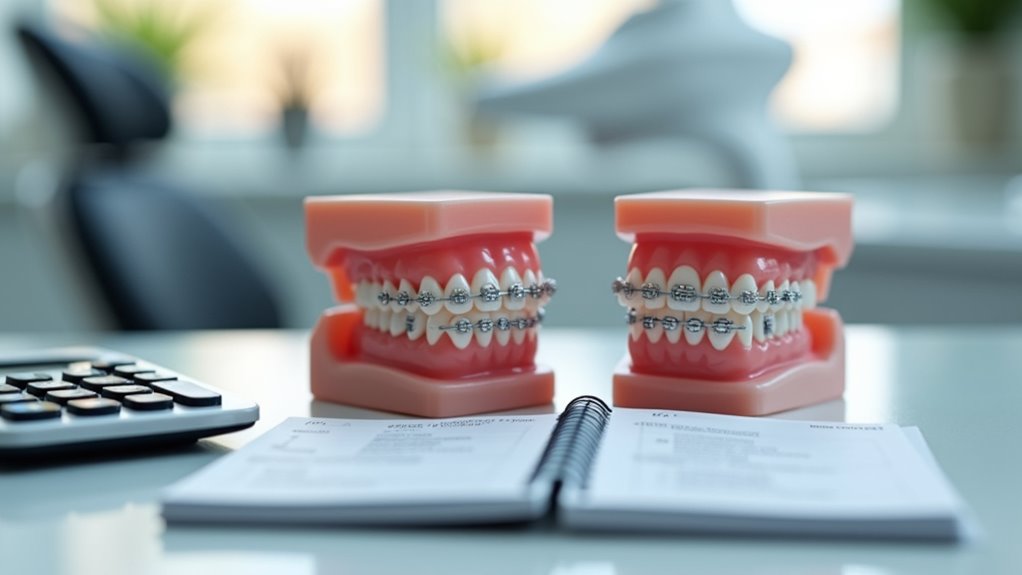
When considering your orthodontic options, you'll find some significant differences between Invisalign and traditional braces.
Treatment duration, aesthetic appeal, and overall comfort are key factors that can influence your decision.
Understanding these aspects can help you make the best choice for your smile.
Treatment Duration Differences
While both Invisalign and traditional braces aim to straighten teeth, their treatment durations can vary considerably based on individual needs and the complexity of each case.
Typically, Invisalign treatment length ranges from 6 to 18 months, while traditional braces may take 18 to 36 months.
Here are some key factors influencing treatment duration:
- Complexity of your case
- Consistency with wearing aligners (20-22 hours/day recommended)
- Frequency of aligner changes (usually every 1-2 weeks)
- Follow-up appointments and adjustments needed
Invisalign's flexibility can lead to shorter treatment times, especially for mild to moderate issues.
However, every individual's journey is unique, and your orthodontist will provide tailored recommendations to achieve the best results.
Aesthetic Considerations
Aesthetic appeal often plays a significant role in choosing between Invisalign and traditional braces.
You're likely to find that Invisalign offers notable aesthetic benefits, as the clear aligners are discreet and often go unnoticed by others. This invisibility can help alleviate common aesthetic concerns associated with the metal brackets and wires of traditional braces, which can draw attention and sometimes impact your self-confidence.
For adults and teens alike, the ability to straighten teeth without the visible signs of dental work is a significant advantage.
However, it's important to weigh these aesthetic considerations against other factors, like effectiveness and cost.
In the end, your choice should reflect not just your aesthetic desires but also your overall treatment goals.
Comfort and Convenience
Although both Invisalign and traditional braces aim to achieve the same goal of straightening teeth, they differ markedly in terms of comfort and convenience. Many prefer Invisalign due to its ease of use and seamless integration into daily routines.
Here are some key differences:
- Comfort: Invisalign aligners are smooth and custom-fitted, reducing irritation compared to metal braces.
- Removability: You can easily remove aligners for meals, brushing, and flossing, allowing better oral hygiene.
- Fewer Office Visits: Invisalign typically requires fewer appointments, saving you time.
- Subtlety: Clear aligners are less noticeable than metal braces, making them more appealing for many adults.
These factors can greatly enhance your comfort level while working toward a perfect smile.
Payment Plans and Financing Options
Steering through the costs of Invisalign can feel overwhelming, but there are several payment plans and financing options available to make treatment more manageable.
Many orthodontists offer affordable options, allowing you to spread out payments over time. You'll find flexible payments that cater to your budget, making it easier to commit to your smile journey.
Some dental practices even provide in-house financing, reducing the reliance on credit cards or loans. Additionally, third-party financing companies may offer plans with low or zero interest.
Don't hesitate to discuss your financial situation with your provider; they're often willing to work with you to create a plan that fits.
With the right support, achieving your dream smile can be within reach.
Insurance Coverage for Invisalign
Maneuvering the financial aspects of Invisalign doesn't end with payment plans; understanding insurance coverage is just as important.
To help you navigate this, consider these key points:
- Check Your Plan – Review your insurance to see if it covers orthodontic treatment.
- Coverage Limitations – Understand any caps or percentage limits on coverage for Invisalign.
- Pre Approval Process – Contact your insurance for pre-approval before starting treatment to avoid unexpected costs.
- Submit Necessary Documentation – Make sure to provide your provider with all required forms to guarantee your claim gets processed smoothly.
Discounts and Promotions to Consider

Wondering how to save on your Invisalign treatment? You'll be glad to know that many orthodontic practices offer seasonal offers that can lighten your financial load.
Keep an eye on special promotions during holidays or back-to-school seasons, as these can provide significant savings.
Additionally, consider asking your friends or family about referral discounts. Some providers reward existing patients for bringing in new ones, which can translate to reduced costs for both you and the person you refer.
Tips for Making Invisalign More Affordable
Making Invisalign more affordable can be easier than you think.
By exploring flexible financing options, checking your dental insurance coverage, and keeping an eye out for discounts and promotions, you can considerably reduce your overall costs.
Let's break down these strategies to help you achieve that perfect smile without breaking the bank.
Flexible Financing Options
A variety of flexible financing options can make Invisalign treatment more achievable for your budget.
By exploring these payment flexibility options, you can find a plan that suits your financial situation:
- Monthly Payment Plans: Spread the cost over several months to lessen the burden.
- Interest-Free Financing: Some providers offer plans without interest to keep costs manageable.
- Credit Check Options: Look for financing options that don't require credit checks, reducing financial barriers.
- Sliding Scale Fees: Ask if your provider offers fees based on income, making treatment more accessible.
These financing options can empower you to prioritize your oral health while serving others.
Don't hesitate to discuss your needs with your orthodontist to find the best plan for you.
Dental Insurance Coverage
How can you make Invisalign more affordable through your dental insurance? First, check your insurance plans to see if they offer coverage for orthodontic treatment, including Invisalign. Many policies do provide some assistance, but it's important to understand your coverage limits.
Contact your insurance provider to get clear details on the percentage they'll cover, and ask if there are any specific requirements or pre-approval processes you need to follow.
Additionally, confirm if there's a lifetime maximum for orthodontic treatment. Knowing these details can help you budget more effectively and reduce your out-of-pocket expenses.
If you're not sure about the details, don't hesitate to ask your dental office; they can help you navigate your options. Every bit helps when it comes to making Invisalign affordable!
Discounts and Promotions
Exploring discounts and promotions can greatly reduce the cost of Invisalign. Here are some tips to keep in mind:
- Seasonal Offers: Many orthodontists run promotions during holidays or events, so be on the lookout for special deals.
- Referral Discounts: If you refer a friend to your orthodontic practice, you might receive a discount on your treatment costs.
- Payment Plans: Ask about flexible financing options that could make your payments more manageable.
- Insurance Benefits: Some dental plans may cover a portion of Invisalign, so check with your provider for potential savings.
Utilizing these strategies can make Invisalign more affordable, allowing you to prioritize your smile while also serving others.
Always ask your orthodontist about available options!
The Value of Investing in Your Smile
Investing in your smile not only enhances your appearance but also boosts your confidence and overall well-being. A well-aligned smile is more than just a cosmetic improvement; it's a lasting smile investment that can positively impact various aspects of your life.
Improved oral health, for example, leads to reduced dental issues, saving you money and time in the long run. Additionally, feeling great about your smile encourages you to engage more fully with others, fostering personal and professional relationships.
With Invisalign, you can achieve that perfect smile discreetly, making it an ideal choice for those serving others. The long-term benefits of embracing a confident smile can truly transform your life and the lives of those around you.