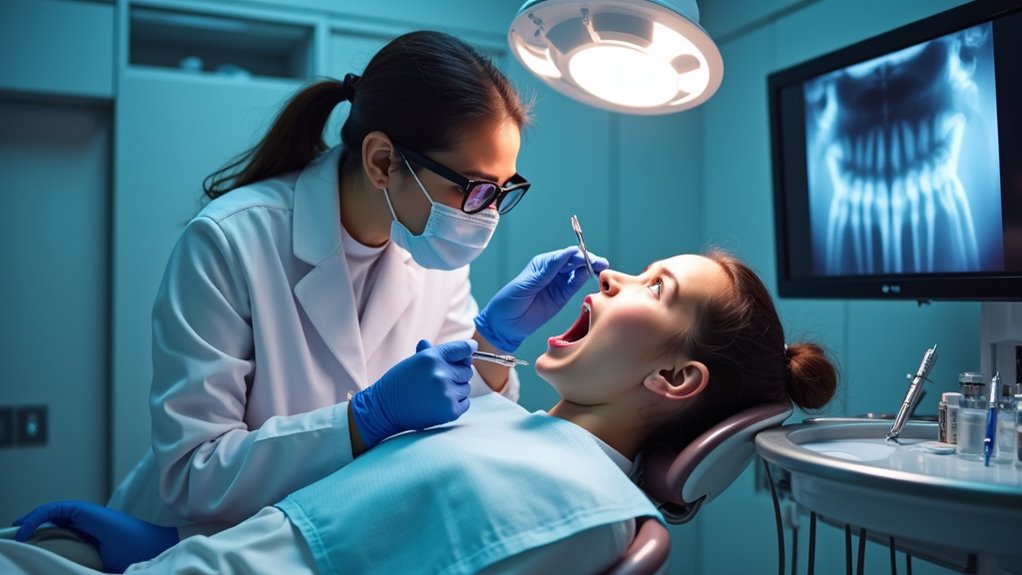
During a routine checkup, your dentist first greets you warmly and reviews your medical history to guarantee personalized care. They perform a visual examination of your teeth and gums, checking for discoloration, cavities, and gum health. X-rays reveal hidden issues not visible during exams. They’ll assess cavities and decay while also screening for oral cancer. Finally, you’ll receive tailored oral hygiene recommendations to maintain peak health. What comes next might surprise you!
Highlights
- Dentists assess tooth discoloration, cavities, and gum inflammation during visual examinations to tailor care to individual patient needs.
- X-rays reveal hidden dental issues, such as bone loss or impacted teeth, aiding in early diagnosis and treatment.
- Diagnostic tools like mirrors and explorers help detect tooth decay signs, including dark spots and sensitivity for effective maintenance.
- A thorough gum health assessment checks for inflammation and recession, crucial for identifying potential gum disease early.
- Oral cancer screening screens for abnormalities in the mouth and throat to improve treatment outcomes and overall health.
The Initial Welcome and Medical History Review

When you arrive for your dental checkup, the initial welcome sets the tone for your visit. A warm, friendly initial greeting from the reception staff immediately helps you feel at ease. They prioritize patient comfort, ensuring you’re relaxed before proceeding with your appointment.
The next step involves a thorough medical history review, where you provide essential information about your health and dental concerns. This isn’t just a routine formality; it allows your dentist to tailor care specifically to your needs.
They may ask about recent medications, allergies, or any ongoing health issues. This attentive approach establishes a foundation of trust, making you feel valued as a patient and ensuring you receive the best possible care during your visit.
Visual Examination of Teeth and Gums
During a dental checkup, the visual examination of your teeth and gums plays an essential role in evaluating your oral health.
Your dentist looks for several key indicators to identify potential issues:
- Tooth discoloration causes: Stains from food, beverages, or smoking.
- Cavities: Soft spots or visible holes on teeth.
- Gum inflammation indicators: Redness or swelling around the gums.
- Plaque buildup: A sticky film on teeth that can lead to decay.
- Bite alignment: Ensuring your teeth fit together correctly.
The Importance of X-Rays
Visual examinations provide valuable insights, but X-rays are essential for uncovering hidden dental issues that aren’t visible to the naked eye. These advanced imaging technologies help dentists detect problems such as bone loss or impacted teeth, ensuring you receive thorough care.
X-rays allow for early diagnosis and treatment, reducing the risk of more complex procedures later. You can rest assured that modern dental X-rays adhere to stringent radiation safety guidelines, minimizing exposure while maximizing diagnostic accuracy.
This proactive approach not only protects your health but also enables your dentist to provide the highest level of care. By understanding the importance of X-rays, you empower yourself to contribute to your overall dental health and well-being.
Identifying Cavities and Decay

During your dental checkup, the dentist will look for signs of tooth decay, such as discoloration or sensitivity.
They’ll use diagnostic tools like mirrors and explorers to closely examine your teeth and identify any cavities.
Early detection is essential for effective treatment and maintaining your oral health.
Signs of Tooth Decay
Tooth decay can often go unnoticed until it becomes a more serious issue, making it essential for you to recognize the subtle signs early on.
Understanding tooth decay causes and identifying early decay symptoms will help you maintain your oral health. Here are some signs to watch for:
- Persistent toothache or sensitivity
- Discoloration or dark spots on teeth
- Visible holes or pits in the enamel
- Bad breath that doesn’t go away
- Swelling around gums or persistent tenderness
Diagnostic Tools Used
When it comes to identifying cavities and decay, dentists rely on a variety of diagnostic tools to guarantee accurate assessments.
One essential method is diagnostic imaging, including X-rays, which helps uncover issues beneath the surface that aren’t visible during a physical exam. These tools have evolved remarkably, thanks to recent advancements, allowing for better detection of early decay and minimizing the need for invasive procedures.
Additionally, dentists use bitewing X-rays to assess the spaces between teeth, ensuring no cavity goes unnoticed.
Leveraging both traditional and modern techniques, they can effectively pinpoint problems, tailoring treatment plans to serve your needs.
Gum Health Assessment
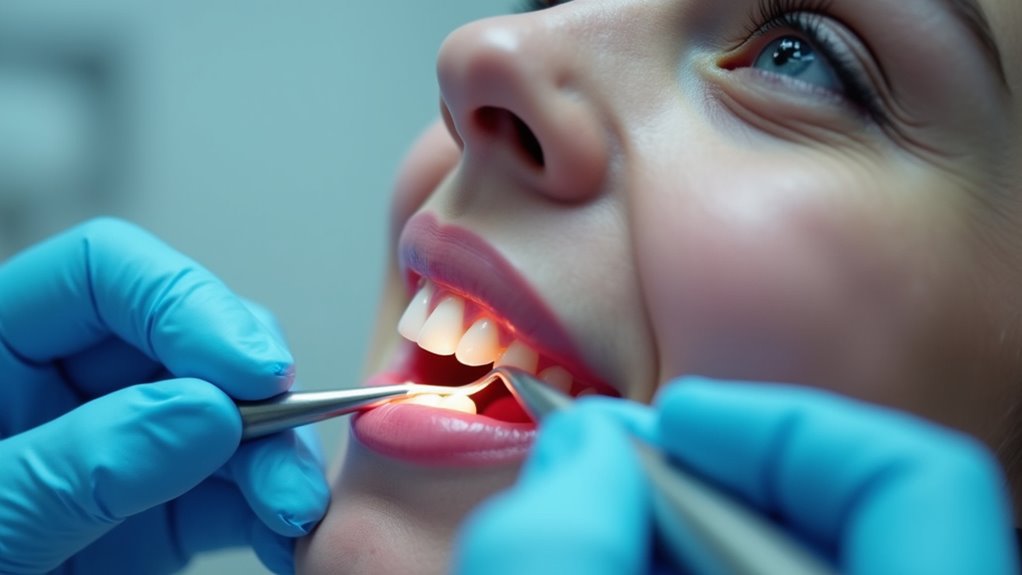
While evaluating your gum health, the dentist will conduct a thorough examination to identify issues like inflammation, recession, or pockets that may indicate periodontal disease.
These assessments are essential because gum disease often starts subtly, usually linked to plaque buildup.
During the exam, expect the dentist to check for:
- Signs of gum inflammation or redness
- Gum recession or loss of tissue
- Pocket depth around your teeth
- Presence of plaque and tartar
- Overall gum health and firmness
Understanding these factors helps in identifying potential problems early on.
If issues are detected, the dentist will recommend a tailored plan to improve your gum health, ultimately aiming for a healthier, brighter smile.
Taking care of your gums benefits both you and those you serve.
Oral Cancer Screening
As part of your dental checkup, your dentist will perform an oral cancer screening to detect any early signs of abnormalities in your mouth, throat, and surrounding areas. This essential step helps identify potential issues before they escalate into more serious conditions.
Your dentist will examine soft tissues, gums, and other regions for unusual spots or growths, ensuring nothing goes unnoticed.
Certain risk factors may increase your likelihood of developing oral cancer, such as tobacco use, heavy alcohol consumption, and HPV. By detecting irregularities early, your dentist can potentially improve treatment outcomes and overall health.
Personalized Oral Hygiene Recommendations
Following your oral cancer screening, your dentist will provide personalized oral hygiene recommendations tailored to your specific needs. These suggestions enhance your oral health and empower you to serve others with confidence.
Consider these key components of your customized recommendations:
- Customized brushing techniques to efficiently remove plaque
- Flossing tips that fit your lifestyle and tooth alignment
- Dietary advice to reduce sugar intake and encourage healthier choices
- Scheduling regular checkups to maintain prime dental health
- Personalized product recommendations, like toothpaste or mouthwash suited for your needs
Implementing these strategies can greatly impact your oral hygiene and overall health, ensuring you’re equipped to assist those around you.
Your smile can radiate positivity and encouragement!