Braces costs in British Columbia can range from $3,000 to $8,000, depending on the type you choose, like traditional metal or clear aligners. Factors like treatment complexity and your orthodontist's location can affect pricing. To ease payments, consider flexible plans or financing options, and check if your insurance covers some costs. Keep in mind hidden fees like initial consultations or diagnostic imaging. Explore your options further to make an informed choice that fits your budget and needs.
Summary Point
- Traditional metal braces in BC typically cost between $3,000 and $7,000, depending on treatment complexity and duration.
- Clear aligners like Invisalign generally range from $4,000 to $8,000, offering a flexible and less visible alternative.
- Payment plans and interest-free financing options help spread costs over time, making braces more accessible financially.
- Insurance coverage for orthodontic services varies, so check with providers to understand potential financial assistance for braces.
- Regular check-ups and retainer costs should be factored into overall budgeting for braces maintenance and post-treatment care.
Understanding the Different Types of Braces

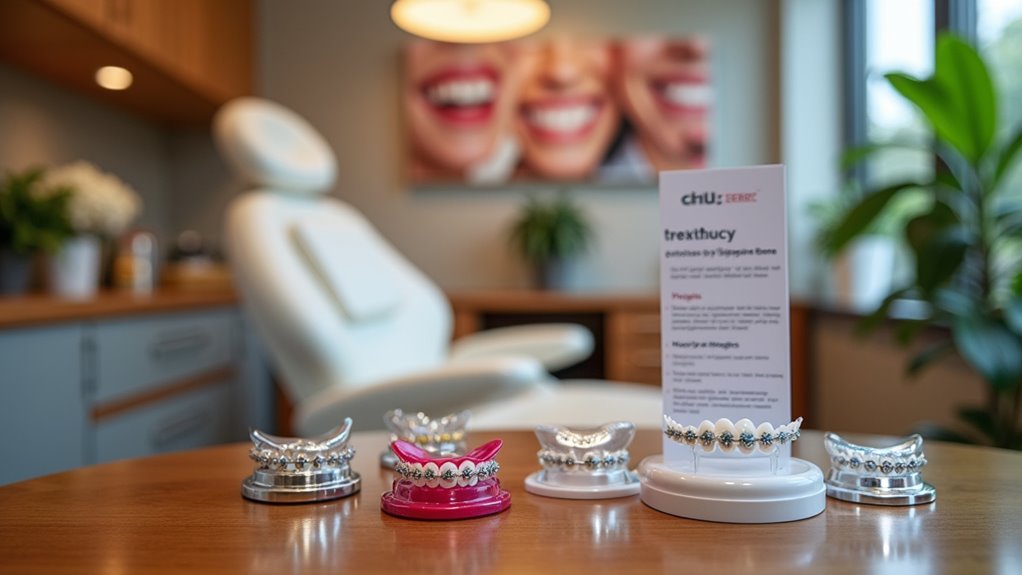
When you're considering braces for yourself or your child, it's essential to understand the different types available. Each type varies in braces materials and affects treatment duration.
Traditional metal braces are the most common, made from durable stainless steel and offering efficient results over a typical duration of 18 to 24 months.
Ceramic braces, made from clear materials, are less noticeable but may require a longer treatment time.
Lingual braces sit behind the teeth, providing an invisible solution but can take longer due to their intricate placement.
Finally, clear aligners, like Invisalign, provide flexibility and comfort with a treatment duration tailored to individual needs.
Evaluating these options helps guarantee the best choice for your or your child's orthodontic journey.
Average Costs of Braces in British Columbia
Choosing the right type of braces is just the beginning; understanding the financial aspect is equally important.
In British Columbia, the average cost of metal braces ranges from $3,000 to $7,000, depending on the complexity of your case. If you opt for clear aligners, such as Invisalign, expect to pay between $4,000 and $8,000.
These costs typically include initial consultation fees, imaging, and follow-up appointments. Insurance often covers a portion, so check your plan to optimize savings.
While investing in your oral health is worthwhile, it's crucial to explore payment plans and financing options that can ease the burden.
Understanding these average costs will help you make informed decisions for your dental journey.
Factors Influencing Braces Pricing
When considering braces, several key factors affect the pricing you'll encounter.
The complexity of your treatment, the type of appliances needed, and the location of your orthodontist all play significant roles in determining costs.
Understanding these factors can help you make an informed decision about your orthodontic care.
Treatment Complexity
Understanding treatment complexity is essential when it comes to braces pricing in British Columbia. The complexity levels of your specific case greatly influence both the duration and total cost of your treatment.
For instance, if you have minor alignment issues, your treatment duration may be shorter and less costly. However, more complicated cases, like overcrowding or severe bite issues, will require longer treatment periods, leading to higher expenses.
Orthodontists assess factors such as tooth movement required and the necessary adjustments, which all contribute to treatment complexity. Being aware of these variables helps you make informed decisions for yourself or those you're serving, ensuring a better understanding of what to expect in your braces journey.
Appliance Type
The type of appliance you select plays a significant role in determining the overall cost of braces in British Columbia. Understanding your options can help you make an informed choice that aligns with your budget and needs.
Here are some common types of braces you might consider:
- Ceramic Braces: Aesthetic and less visible, they often cost more than traditional metal braces.
- Lingual Braces: These are placed behind your teeth, making them invisible; however, they're typically the most expensive option.
- Traditional Metal Braces: Usually the most affordable, they're effective but more noticeable.
- Clear Aligners: These offer convenience and aesthetics, but pricing may vary based on the treatment plan.
Each appliance type has its advantages and costs, so weigh your options carefully when deciding.
Location Variability
While you might think that braces cost the same everywhere, location plays an important role in pricing. Geographic disparities can greatly affect your overall expenses.
For instance, urban areas typically offer more orthodontic options, which can drive competition and lead to better pricing. However, this increased access to providers doesn't always guarantee lower prices.
In contrast, rural areas might've limited choices, and fewer practitioners could mean higher rates due to less competition.
Additionally, factors like local cost of living and demand influence pricing structures. It's vital to research and compare orthodontic practices in your area to confirm you're making an informed decision that aligns with your budget and needs.
Be proactive in exploring accessible options!
Payment Plans and Financing Options

When you're considering braces in BC, exploring payment plans and financing options can make the process more manageable.
Many orthodontic practices understand budget concerns and offer flexible options to fit your needs.
Here are some common choices you might encounter:
- Monthly payment plans: Spread the cost over time with low monthly payments.
- Interest-free financing: Pay for your treatment without added interest charges.
- Sliding scale fees: Adjusted costs based on your financial situation.
- Credit options: Specialized dental financing that's accessible to patients.
Insurance Coverage for Orthodontic Treatment
When considering braces in BC, it's essential to understand how insurance coverage can impact your costs.
Different insurance plans offer varying levels of support for orthodontic treatment, and it's important to know the limitations and any potential out-of-pocket expenses you'll face.
Reviewing your policy will help you make informed decisions about financing your treatment.
Types of Insurance Plans
Understanding the types of insurance plans available for orthodontic treatment is essential for budgeting your braces cost in BC.
Knowing your options helps you find the best coverage for your needs. Here are some common types of insurance plans:
- Private Dental Insurance: Covers a portion of orthodontic treatment costs.
- Health Benefit Plans: May include orthodontics as part of overall health coverage.
- Government Programs: Offer financial assistance for eligible families to reduce costs.
- Dental Savings Plans: Provide discounts for services without traditional insurance complexities.
Coverage Limitations Explained
How can you navigate the complex landscape of insurance coverage limitations for orthodontic treatment? Understanding your policy options is vital.
Many insurance plans come with specific coverage gaps, particularly for orthodontic services like braces. For instance, some policies might only cover a portion of the treatment cost or have age limits for coverage. It's important to review your plan details carefully and note any exclusions or maximum benefits.
Additionally, some providers may require pre-authorization before starting treatment, so getting this step right can prevent unexpected costs later.
Out-of-Pocket Expenses
What should you expect regarding out-of-pocket expenses for orthodontic treatment? While dental insurance can help, you may still face some unexpected expenses.
It's important to understand your policy's out-of-pocket limits to avoid surprises.
Here's what to keep in mind when budgeting for braces:
- Initial consultation fees may not be covered.
- Costs for diagnostic imaging can add up quickly.
- Treatment adjustments and retainers may incur additional charges.
- Possible payments for missed appointments or late fees.
Affordable Alternatives to Traditional Braces
While traditional braces have long been the go-to solution for straightening teeth, there are several affordable alternatives worth considering.
DIY aligners offer a budget-friendly option that allows you to straighten your teeth at home. They typically come with a lower price tag than conventional braces, making them an attractive choice for many.
Another option is ceramic braces, which provide the effectiveness of traditional braces but are less noticeable due to their tooth-colored brackets. They can be a great compromise between aesthetics and functionality.
With these alternatives, you can achieve a beautiful smile without breaking the bank. Always consult with an orthodontist to find the best solution tailored to your needs and budget.
Cost Comparisons: Metal Braces vs. Clear Aligners
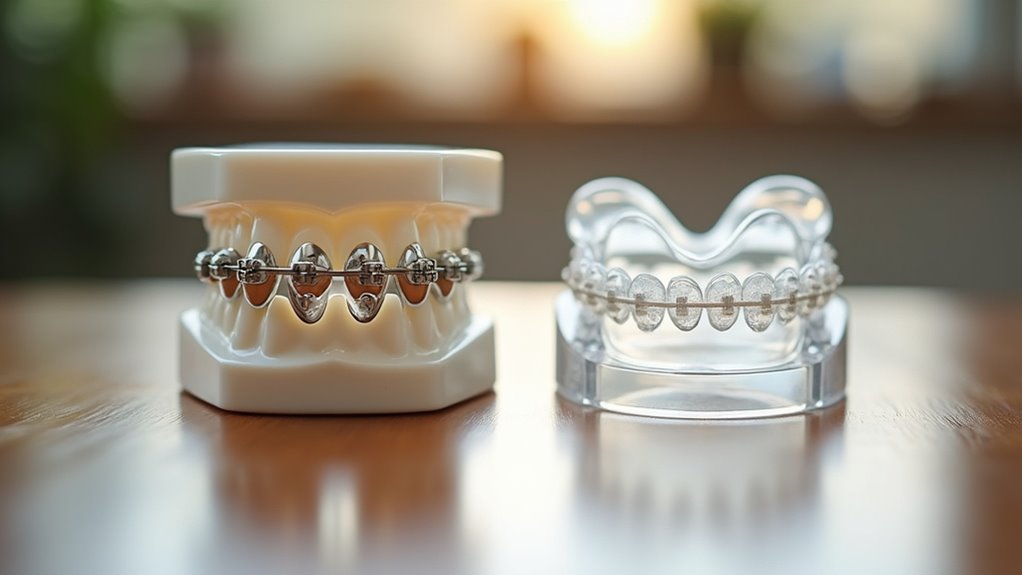
When considering braces, it's important to weigh the costs of metal braces against clear aligners. Each option has its benefits, catering to different needs and budgets.
Here's a quick comparison to help you decide:
- Metal Braces Benefits: Often more affordable, durable, and capable of treating severe alignment issues.
- Clear Aligners Advantages: Discreet, removable for easy cleaning, and often more comfortable.
The average cost for metal braces ranges from $3,000 to $7,000, while clear aligners can be slightly higher, typically between $4,000 and $8,000.
Hidden Costs to Consider Before Getting Braces
Before you commit to braces, it's crucial to evaluate some hidden costs that might arise.
Initial consultation fees can add up, and don't forget about retainers and ongoing maintenance costs after treatment.
Being aware of these expenses will help you budget more effectively for your orthodontic journey.
Initial Consultation Fees
Have you considered the potential hidden costs associated with getting braces? The initial consultation can sometimes come with fees that you mightn't expect. During this first appointment, you'll review your dental needs and explore options, but you should also be aware of these possible costs:
- X-rays and diagnostic imaging
- Treatment proposals or plans
- Follow-up consultations
- Financial arrangements or payment plans
Understanding the consultation process helps you prepare for these fees.
Be sure to ask your orthodontist about costs before your appointment. Getting clear on the expenses upfront can prevent any surprises in your journey toward a healthier smile.
Embrace your path confidently with knowledge about each step!
Retainers and Maintenance Costs
Retainers play an essential role in maintaining the results of your orthodontic treatment after getting braces.
You'll need to choose from various retainer types, such as fixed or removable options, each with its own benefits. The choice depends on your specific needs and lifestyle.
Maintenance frequency is vital to guarantee your retainers remain effective. You should clean your removable retainers daily to prevent bacteria buildup, while fixed retainers require periodic checks by your orthodontist.
Remember, this ongoing care involves additional costs, often overlooked in your initial budget.
Be prepared for follow-up appointments to monitor your progress and adjust your maintenance plan as needed.
Maintenance and Retention Costs After Braces
After your braces come off, maintaining that perfect smile requires a commitment to retention, which involves additional costs.
You'll need to navigate ongoing maintenance schedules and explore various retainer options.
Here's what to reflect on:
- Retainer Types: Different options include fixed, removable, or clear retainers, each with specific costs.
- Regular Check-ups: Periodic visits to your orthodontist help monitor your alignment and verify your retainer fits correctly.
- Replacement Costs: Be prepared for potential expenses if your retainer breaks or gets lost.
- Insurance Coverage: Some plans may partially cover retention costs, so check your benefits.
Investing in your retainer now guarantees your teeth stay beautifully aligned for years to come!
Tips for Finding the Right Orthodontist Within Your Budget
How do you find the right orthodontist without breaking the bank? Start by researching the orthodontist qualifications in your area—ensure they're licensed and experienced.
Look for reviews from previous patients to gauge satisfaction. Make a list of potential candidates and note their fee structures to help with budget considerations.
Don't hesitate to ask about payment plans or financing options; many practices offer flexible solutions that fit various budgets.
Schedule consultations; these are often free and allow you to ask questions about treatment approaches and costs.
Finally, consult your insurance provider to understand what's covered. This way, you'll make informed choices that serve both your finances and your orthodontic needs effectively.