
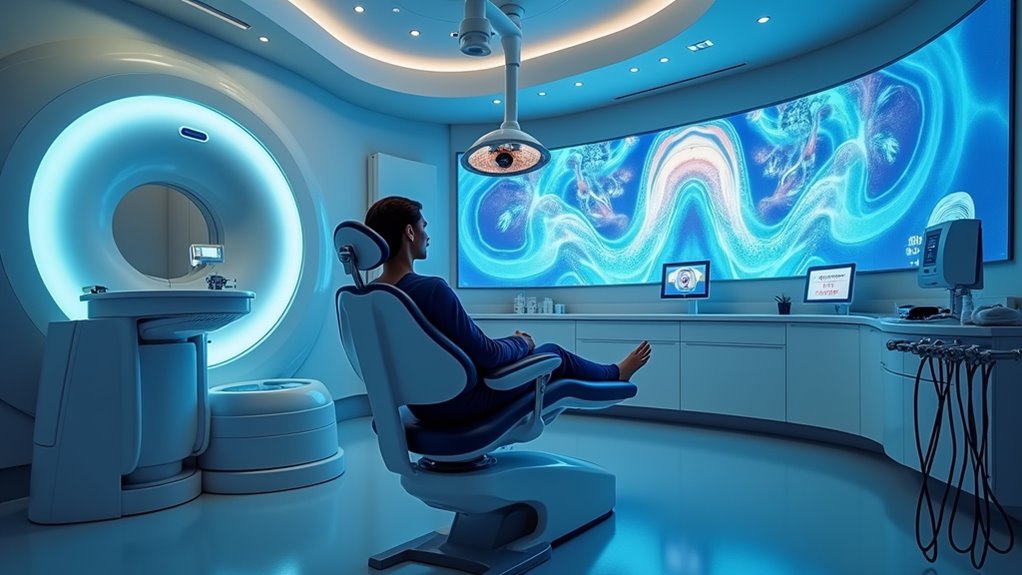
3D imaging technology in dentistry is transforming customized dental care. It gives you detailed visualizations of teeth and bones, enabling accurate diagnoses and tailored treatment plans. This technology allows early identification of potential issues and enhances patient understanding through clear models. Compared to traditional imaging, 3D imaging provides superior accuracy and improves patient outcomes. As advancements continue, it’s exciting to explore how these innovations further elevate the dental experience for you and your family.
Highlights
- 3D imaging technology enhances diagnostic accuracy, enabling tailored treatment plans based on detailed visualization of dental structures.
- The integration of AI optimizes the diagnostic process, leading to better assessments and customized patient care.
- Real-time imaging during procedures allows for immediate feedback and adjustments, improving efficiency and patient satisfaction.
- Future advancements include immersive Virtual Reality simulations, providing engaging experiences that educate patients about their treatment options.
- Ongoing training for dentists in advanced imaging techniques ensures effective integration of 3D technology into practice, enhancing overall care quality.
Understanding 3D Imaging Technology
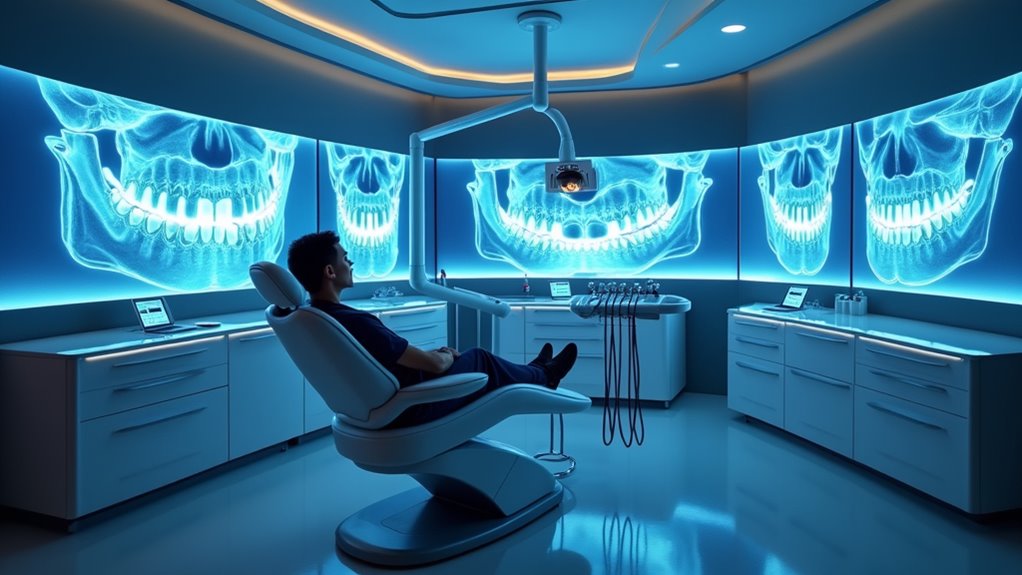
3D imaging technology revolutionizes the way dental professionals visualize and diagnose oral health issues. As you explore 3D imaging benefits, you’ll notice significant advancements in your ability to assess complex conditions.
This cutting-edge technology enables precise, detailed imaging of teeth, bones, and surrounding tissues, providing an all-encompassing view that traditional 2D imaging can’t match. With enhanced visualization, you can identify and plan treatments more effectively, using less invasive techniques and improving patient outcomes.
Furthermore, real-time imaging allows you to engage with patients, fostering a better understanding of their needs and treatment options. By embracing these technology advancements, you’ll elevate your practice, ultimately enhancing the quality of care you provide to your patients.
Advantages of 3D Imaging in Dental Diagnosis
3D imaging technology markedly enhances the accuracy of dental diagnoses by providing detailed visualizations of oral structures.
This precision allows you to develop customized treatment plans tailored to each patient’s unique needs.
With improved diagnostic capabilities, you’re able to deliver more effective and efficient care.
Enhanced Accuracy in Diagnosis
As dental professionals increasingly embrace advanced imaging technologies, enhanced accuracy in diagnosis has become a significant advantage.
3D imaging offers unparalleled views of the dental structures, enabling you to identify issues that traditional methods might miss. By integrating AI into imaging software, you can optimize diagnostic processes, allowing for quicker and more accurate assessments.
This technology enhances your ability to detect conditions early, reducing complications and improving patient outcomes. The high-resolution images assist in precise evaluations, making diagnoses more reliable.
With this advancement, you can deliver tailored care that addresses your patients’ needs effectively. Emphasizing this accuracy not only fosters patient trust but also elevates the overall standard of dental care you provide.
Customized Treatment Planning
When you leverage advanced imaging technologies, customized treatment planning becomes a powerful benefit of modern dentistry. This digital technology enhances your ability to provide personalized care tailored to each patient’s needs.
Here are key advantages of 3D imaging in treatment planning:
- Accurate Visualization: You obtain precise representations of anatomical structures, facilitating clearer communication with patients.
- Enhanced Diagnosis: You identify potential issues earlier, allowing for timely interventions.
- Treatment Simulation: You can model potential procedures, helping patients visualize outcomes and make informed decisions.
- Streamlined Workflow: You improve efficiency in planning and executing complex cases, ultimately enhancing patient satisfaction.
Enhanced Treatment Planning and Customization
Enhanced treatment planning and customization in dentistry have revolutionized patient care by leveraging advanced imaging techniques.
By integrating digital workflows, clinicians can develop precise treatment strategies tailored to each patient’s unique anatomical and aesthetic needs. This approach not only improves diagnosis accuracy but also enhances the ability to visualize treatment outcomes, leading to more informed decisions.
Utilizing advanced imaging technologies fosters effective patient education, allowing you to explain procedures visually and clearly, improving patient engagement and compliance. When patients understand their treatment plans through precise visualization, they’re more likely to trust and participate in their care.
This level of customization signifies a shift towards a more patient-centered approach, emphasizing personalized care in dental practice.
3D Imaging Vs Traditional Dental Imaging
While traditional dental imaging techniques like X-rays have served the field for decades, 3D imaging offers significant advantages that transform diagnostic and treatment capabilities.
Here’s how 3D imaging elevates the standard of care:
- Enhanced Visualization: You get a thorough view of anatomical structures, which aids in accurate diagnoses.
- Improved Digital Workflows: 3D imaging integrates seamlessly into your practice, streamlining processes from diagnosis to treatment planning.
- Customized Treatment Plans: You can tailor treatments based on precise measurements and detailed images.
- Better Patient Education: With clear visual aids, patients grasp their treatment options better, fostering informed decision-making.
These advancements not only bolster clinical efficacy but also enhance patient satisfaction and care outcomes.
Applications of 3D Imaging in Various Dental Procedures
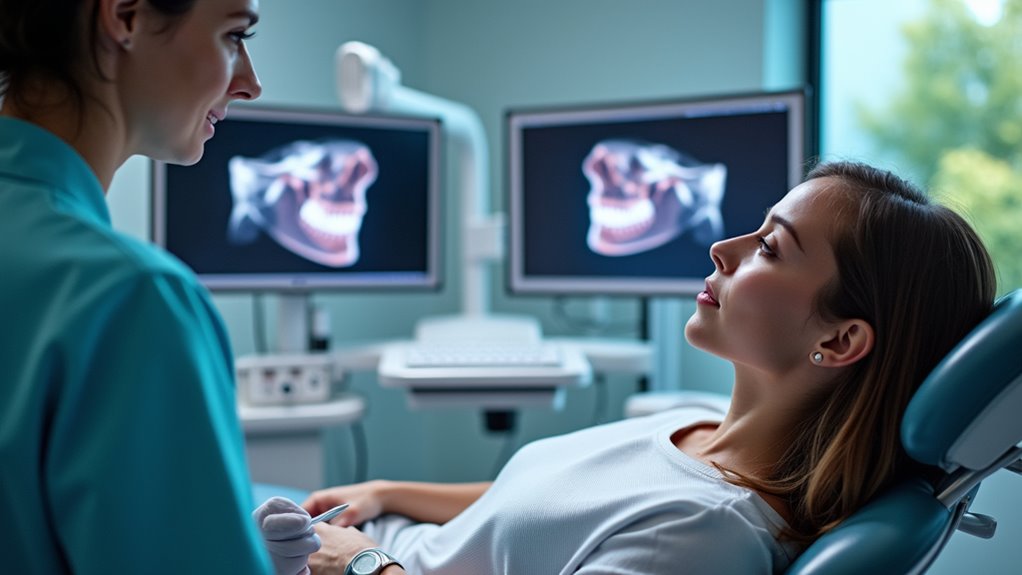
As you explore the diverse applications of 3D imaging in dentistry, you’ll find that its integration remarkably enhances procedures ranging from implant placements to orthodontic assessments.
In implant placements, this technology provides detailed views of anatomical structures, allowing for precise positioning and ideal outcomes.
For oral surgery, 3D imaging aids in surgical planning by offering an all-encompassing view of patients’ jaw and facial anatomy, considerably reducing complications.
Additionally, it facilitates the evaluation of bone quality and quantity, ensuring successful implant integration.
In orthodontics, it allows for accurate treatment planning and monitoring of tooth movement.
Impact on Patient Experience and Comfort
3D imaging greatly enhances diagnostic precision, allowing your dentist to identify issues more accurately.
This improved accuracy can reduce the need for invasive procedures and related discomfort, which in turn helps lower your treatment anxiety.
As a result, you’re likely to feel more at ease during your dental visits.
Enhanced Diagnostic Precision
Advanced imaging technologies enhance diagnostic precision in dentistry, greatly impacting patient experience and comfort. By leveraging improved image accuracy, you can offer targeted treatments that address specific issues more effectively.
Here are key benefits:
- Early Detection: Advanced diagnostic tools help identify dental problems before they escalate, leading to better outcomes.
- Customized Treatment Plans: With precise images, you can tailor strategies that align with individual patient needs.
- Informed Consent: Accurate diagnostics foster transparency, allowing patients to understand their conditions and treatment options fully.
- Efficient Workflow: Enhanced imaging reduces the need for repeated procedures, saving time for both you and your patients.
Reduced Treatment Anxiety
When patients feel informed and involved in their dental care, their treatment anxiety considerably decreases.
By integrating advanced technology such as 3D imaging, dental professionals can provide detailed visuals that enhance patient education. This clarity empowers patients, allowing them to understand their conditions and proposed treatments better.
As a result, you’re more likely to engage in meaningful discussions with your dentist, reducing fear associated with uncertainty. The transparency fostered by this technology not only alleviates anxiety but also builds trust in the dental team.
As you explore customized dental care options, remember that informed patients often report higher satisfaction levels, translating to a more comfortable experience throughout treatment.
Emphasizing technology integration in patient education ultimately reshapes the dental visit into a supportive environment.
Future Trends in 3D Imaging for Dentistry
As technology evolves, dentistry is poised to experience considerable breakthroughs in 3D imaging that will transform diagnostic and treatment processes.
Here are some future trends you can expect:
- Integration with Virtual Reality: You’ll see enhanced patient experiences through immersive simulations, fostering better understanding of treatments.
- Advanced Predictive Modeling: Improved algorithms will enable more accurate predictions of treatment outcomes, enhancing planning and execution.
- Increased Customization: Tailored treatment plans will become standard, thanks to precise anatomical modeling and data analysis.
- Real-Time Imaging: Immediate feedback during procedures will allow for adjustments on the fly, improving efficiency and patient satisfaction.
These advancements will considerably enhance the quality of care you provide, ensuring personalized experiences for your patients.
The Role of Dentists in Adopting 3D Technology
While embracing 3D technology in dentistry offers numerous advantages, your role as a dentist is essential for its successful integration. Effective dentist training is vital, allowing you to understand and apply advanced imaging techniques that enhance patient care.
By incorporating 3D imaging into your practice, you can provide customized treatment plans that cater to individual patient needs. Additionally, advocating for technology integration within your practice fosters efficiency and precision, leading to better outcomes.
You’ll also need to stay updated with the latest advancements and methods, ensuring you’re equipped to utilize these tools effectively. Ultimately, your commitment to mastering 3D technology won’t only improve your skills but also greatly elevate the quality of service you provide to your patients.