
Conquering dental anxiety is key to a stress-free visit. Start by communicating openly with your dentist about your fears and concerns. Practice relaxation techniques, like deep breathing and progressive muscle relaxation, before your appointment. Consider distraction methods such as music or calming visuals during treatment. If necessary, explore sedation options to enhance comfort. By implementing these strategies, you can transform your experience, making future visits more manageable and less intimidating—discover more about building a positive mindset.
Highlights
- Communicate openly with your dentist about fears and preferences to build trust and improve comfort during visits.
- Utilize deep breathing exercises and progressive relaxation techniques to calm nerves before and during appointments.
- Consider distraction methods like music, podcasts, or virtual reality to ease anxiety during dental procedures.
- Investigate sedation options, like nitrous oxide or oral sedation, for added comfort during treatment.
- Bring a supportive friend for encouragement and to help create a relaxed atmosphere during your visit.
Understanding Dental Anxiety
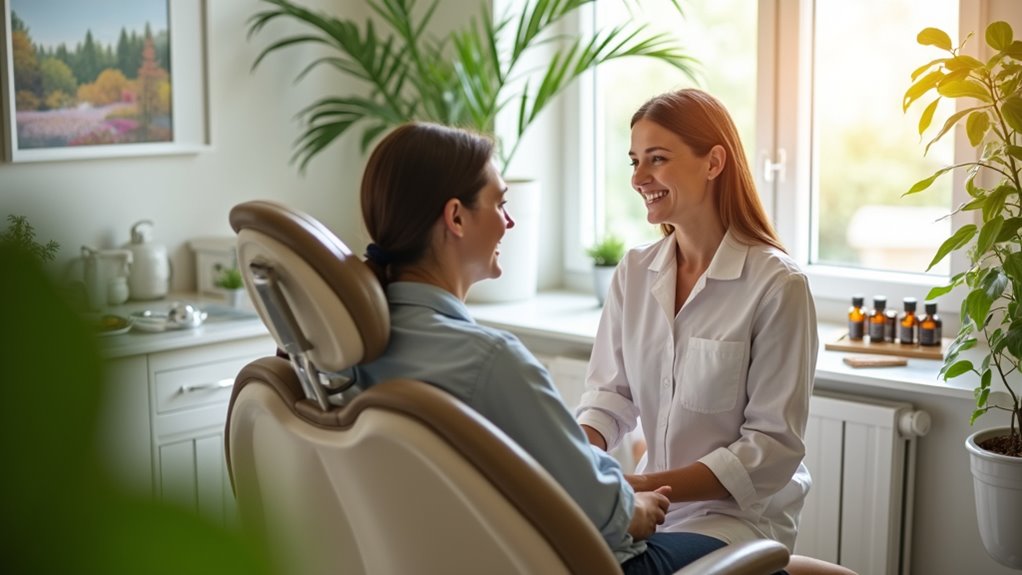
Understanding dental anxiety is essential for anyone who feels apprehensive about visiting the dentist, as recognizing these feelings can lead to effective coping strategies. Various causes of anxiety may stem from past traumatic experiences, fear of pain, or even the dental environment itself.
Acknowledging these triggers allows you to adopt proactive coping mechanisms tailored to your needs. Techniques such as deep breathing, visualization, or progressive muscle relaxation can help ease your apprehension.
Additionally, bringing a supportive friend or asking about sedation options can provide further comfort. Remember, you’re not alone in facing this anxiety, and many effective tools exist to help you approach your dental visits with confidence.
Embracing these strategies can transform your experience for the better.
Communicating With Your Dentist
Open communication with your dentist is essential for managing dental anxiety effectively. Don’t hesitate to express your concerns and preferences regarding treatment. Your dentist wants to understand your individual needs and will appreciate your honesty.
Discuss your treatment expectations clearly; this transparency helps establish a trusting relationship. If you have any fears or past experiences affecting your comfort level, share those too. Remember, you’re the patient, and your comfort matters.
Ask questions about procedures and the tools used; knowing what to expect can alleviate anxiety. Collaborating with your dentist guarantees that your visit aligns with your personal preferences and needs, making it a more positive experience.
Ultimately, effective communication empowers you to take charge of your dental health journey.
Breathing and Relaxation Techniques
When anxiety creeps in before a dental appointment, incorporating breathing and relaxation techniques can greatly help calm your nerves. One effective strategy is deep breathing.
Take a moment to inhale slowly through your nose, allowing your abdomen to expand, and then exhale through your mouth. Repeat this process several times to center yourself.
Another technique is progressive relaxation, where you consciously tense and then relax different muscle groups in your body, starting from your toes and working up to your head.
This helps release physical tension and fosters a sense of calm. By practicing these techniques regularly, you’ll find that they become valuable tools in managing dental anxiety, allowing you to approach your appointments with more confidence and ease.
Distraction Methods During Treatment
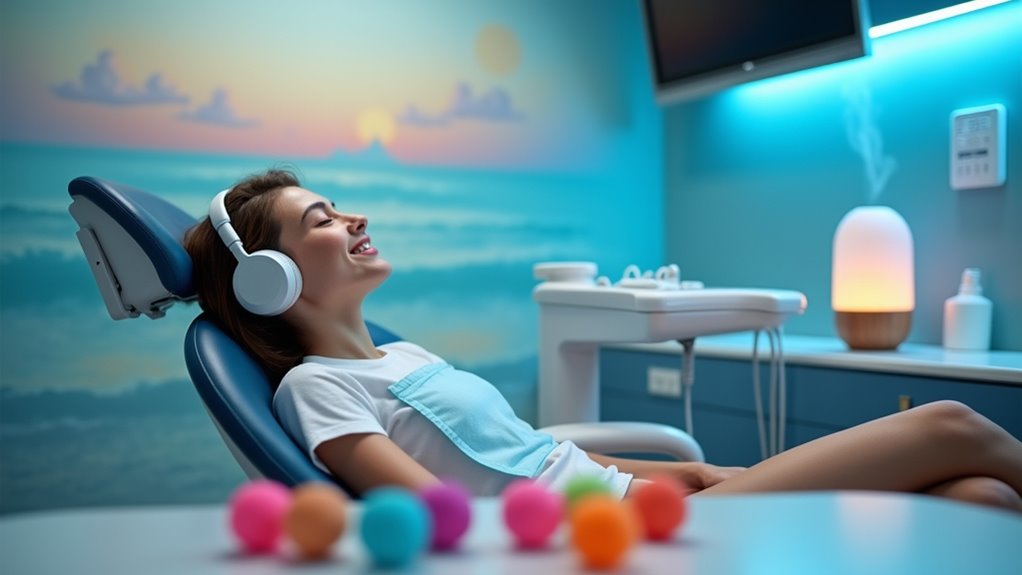
When you’re in the dental chair, finding ways to distract yourself can greatly ease your anxiety.
Listening to music or podcasts can shift your focus away from the procedure, while visual entertainment options, like videos, can provide a welcome escape.
These strategies not only help make your experience more enjoyable but also create a sense of control during your visit.
Music or Podcasts
Many patients find that listening to music or podcasts during dental treatments can considerably reduce anxiety and create a more relaxed atmosphere.
By immersing yourself in calming music playlists or engaging podcast recommendations, you can effectively distract your mind from the sounds and sensations of the procedure.
This simple yet powerful technique offers a sense of control and comfort that many patients appreciate.
Consider discussing your preferred genres with your dentist; they might help you set up a playlist tailored to your tastes.
If you’re unfamiliar with podcasts, explore options ranging from storytelling to educational topics.
Preparing your audio selections in advance can transform your dental visit into a more pleasant experience, making it easier to focus on your health and well-being.
Visual Entertainment Options
Alongside audio distractions like music and podcasts, visual entertainment offers another effective way to ease dental anxiety during treatments.
Many dental practices now provide options such as screens displaying calming visuals. These serene imagery can transport you to tranquil settings, allowing your mind to drift away from the treatment at hand.
Additionally, some offices offer virtual reality headsets, immersing you in soothing environments that can greatly distract you from dental procedures.
By focusing on these engaging visuals, you can reduce your stress and feel more comfortable in the dental chair.
It’s essential that your dental team understands your preferences, so don’t hesitate to ask about these options during your visit for a more enjoyable experience.
Sedation Options for Enhanced Comfort

When it comes to managing dental anxiety, sedation options can play a vital role in enhancing your comfort during treatment.
You’ll want to explore various types of sedation methods available to find what suits you best, along with understanding their safety and efficacy.
Knowing your options can empower you to approach dental visits with greater confidence and ease.
Types of Sedation Methods
Although dental visits can provoke anxiety, various sedation methods are available to enhance your comfort and ease during treatments.
Nitrous oxide, often referred to as laughing gas, is a popular option that helps you relax while remaining awake and responsive. It’s inhaled through a mask and takes effect quickly, allowing your dentist to perform necessary procedures with minimal discomfort.
Another option is oral sedation, which involves taking a prescribed medication before your appointment. This method helps reduce anxiety and may cause drowsiness, making your experience more pleasant.
Both methods prioritize your comfort and safety, ensuring you receive the care you need without heightened stress.
Discuss these options with your dentist to find the right fit for you.
Safety and Efficacy Considerations
Understanding the safety and efficacy of sedation options is essential for your dental anxiety management. When considering sedation, make sure your dental team follows strict safety protocols. This not only protects your health during the procedure but also enhances your comfort.
Your dentist should provide efficacy assessments for each sedation method, helping you choose the right one based on your unique needs. Techniques like nitrous oxide or oral sedation can greatly reduce anxiety and help you remain relaxed throughout your visit.
Discuss your concerns with your dentist, as they can guide you in making informed decisions that prioritize your well-being. Remember, your comfort during dental visits directly influences the overall experience, so advocate for the options that work best for you.
Building a Positive Mindset for Future Visits

Building a positive mindset for dental visits can greatly reduce anxiety and contribute to a more pleasant experience. Start using positive affirmations, such as “I am calm and in control,” to reinforce a sense of empowerment.
Repeat these affirmations daily, especially before your appointment, to cultivate a more positive outlook.
Engage in visualization exercises by imagining a successful visit, where you feel relaxed and confident. Picture yourself sitting in the dental chair, comfortable and at ease, surrounded by caring professionals.
This mental preparation can shift your focus from fear to positive anticipation.
Combining these techniques fosters resilience and transforms your perspective on dental visits, ensuring your future experiences aren’t only manageable but enjoyable.