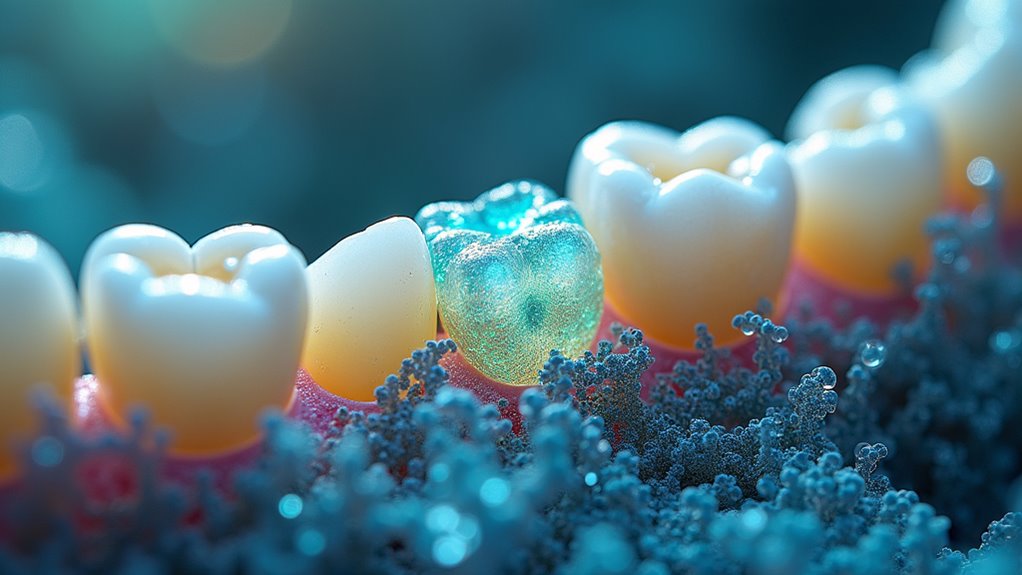
Your mouth hosts a fascinating ecosystem known as the oral microbiome, comprising diverse microorganisms greatly influencing your oral and systemic health. A balanced microbiome protects against pathogenic overgrowth and aids in digestion. However, factors like diet can disrupt this balance, leading to dysbiosis. Specifically, high sugar intake promotes harmful bacteria, while fiber and probiotics foster beneficial ones. Understanding these dynamics is essential for maintaining oral health, and there’s much more to uncover about this hidden world.
Highlights
- The oral microbiome comprises diverse microorganisms vital for digestion, immune response, and maintaining oral health balance.
- Dysbiosis in the oral microbiome can lead to increased risk of oral diseases and systemic health issues.
- Dietary choices significantly influence the oral microbiome; high sugar promotes harmful bacteria, while fiber-rich foods enhance beneficial microbes.
- Research advancements in oral microbiome studies are leading to innovative diagnostic tools and therapies for better oral health management.
- A healthy oral microbiome is essential not only for oral health but also for overall well-being, impacting conditions like cardiovascular health and diabetes.
What Is the Oral Microbiome?
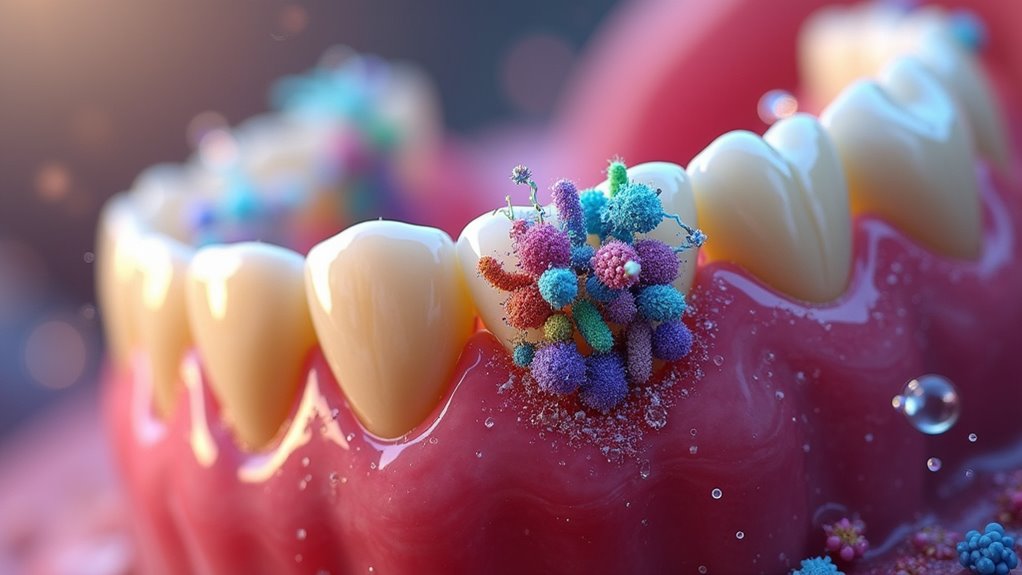
The oral microbiome refers to the diverse community of microorganisms residing in your mouth, encompassing bacteria, viruses, fungi, and archaea.
This intricate oral ecosystem showcases a remarkable microbial diversity, fundamental for maintaining the balance of oral health. Each species contributes uniquely, from facilitating digestion to influencing immune responses.
Disruptions in this microbial balance can lead to dysbiosis, impacting not just oral conditions but overall health. Understanding the oral microbiome empowers you to adopt practices that nurture this ecosystem, such as dietary choices and oral hygiene.
By serving others with knowledge about their own microbiomes, you can promote healthier lifestyles and inspire awareness of the essential roles these microorganisms play.
Nurturing microbial diversity in the mouth is critical for harmonious biological functions.
The Role of Microorganisms in Oral Health
While you might think of oral health as solely dependent on brushing, the microorganisms in your mouth play a pivotal role in maintaining it.
Microbial diversity is essential; a balanced community of bacteria can help prevent harmful species from overgrowth. These beneficial bacteria engage in complex bacterial interactions, forming a protective barrier against pathogens and supporting your immune response.
They also assist in breaking down food particles, contributing to overall digestion and nutrient absorption. Maintaining a healthy oral microbiome not only supports local health but also enhances your ability to serve others effectively.
How the Oral Microbiome Affects Systemic Health
Although many people underestimate the connection between oral health and systemic well-being, emerging research highlights the profound impact of the oral microbiome on various bodily functions.
The microorganisms residing in your mouth can influence systemic effects, including cardiovascular health and diabetes management. For instance, harmful bacteria can trigger inflammatory responses that compromise your immune response, ultimately affecting other organs.
Studies have shown that oral pathogens might enter the bloodstream, contributing to conditions like endocarditis.
Moreover, maintaining a balanced oral microbiome can support your body’s ability to fend off infections and inflammation.
Thus, by prioritizing oral health, you not only protect your smile but also enhance your overall health, reinforcing the crucial link between your mouth and systemic well-being.
Factors Influencing the Oral Microbiome

Understanding how oral health influences systemic well-being raises important questions about what factors contribute to the composition of the oral microbiome. Several key influences play a role in shaping this intricate ecosystem, including:
- Genetic Factors: Your genetic makeup can determine your saliva composition, immune responses, and predisposition to certain oral conditions, affecting microbial communities.
- Environmental Influences: Climate, pollution, and social interactions impact microbial exposure, shaping the diversity and stability of your oral microbiome.
- Hygiene Practices: Oral hygiene habits—like brushing, flossing, and routine dental visits—either promote or disrupt microbial balance, influencing overall health.
Being aware of these factors can help you provide better care to others, ultimately improving their oral and systemic health.
The Connection Between Diet and Oral Microbiome
Your dietary choices greatly influence the composition and health of your oral microbiome.
High sugar consumption promotes the growth of harmful bacteria, while fiber-enriched foods foster beneficial microbes.
Additionally, incorporating probiotics into your diet can enhance oral health, emphasizing the critical role nutrition plays in shaping microbial balance.
Sugar’s Impact on Bacteria
When you consume sugar, the oral microbiome reacts in ways that profoundly influence your dental health and overall oral ecosystem. Sugar fermentation by harmful bacteria leads to acid production, which can accelerate cavity formation.
This process disrupts the delicate balance of your oral microbiome, tipping the scales in favor of detrimental organisms.
Here are three key impacts of sugar on your oral health:
- Increased Acidity: Higher acidity in the mouth erodes enamel, amplifying decay risk.
- Bacterial Proliferation: Sugars fuel the growth of pathogenic bacteria, outpacing beneficial ones.
- Dysbiosis: A sugary diet can cause an imbalance that fosters disease and hinders oral health.
Understanding these effects can empower you to make informed dietary choices for healthier smiles.
Fiber-Enriched Foods Benefits
The detrimental effects of sugar on your oral microbiome highlight the importance of incorporating fiber-enriched foods into your diet.
Fiber sources like fruits, vegetables, legumes, and whole grains can greatly benefit your oral health. These foods not only foster the growth of beneficial bacteria but also enhance overall digestive health, creating a balanced microbiome.
As bacteria metabolize fiber, they produce short-chain fatty acids that reduce inflammation and promote oral tissue repair. This dietary shift can also lower the pH in your mouth, reducing cavity-causing acids.
Probiotics and Oral Health
Numerous studies underscore the pivotal role probiotics play in maintaining oral health, directly linking dietary choices to the composition of the oral microbiome.
By incorporating specific probiotic strains, you can foster an environment rich in beneficial bacteria that contribute to oral wellness.
Consider these three key health benefits:
- Reduction of Oral Pathogens: Certain probiotic strains can inhibit harmful bacteria, lowering the risk of cavities and gum disease.
- Enhanced Gum Health: Oral supplements containing probiotics can promote healthier gums by reducing inflammation and supporting tissue regeneration.
- Improved Breath Freshness: Beneficial bacteria can outcompete odor-causing microbes, maintaining fresher breath.
Maintaining a Balanced Oral Microbiome
Maintaining a balanced oral microbiome hinges on your commitment to dental hygiene and specific dietary choices.
Effective plaque control through regular brushing and flossing considerably influences the microbial landscape in your mouth.
Additionally, the foods you consume either nourish beneficial bacteria or promote the growth of harmful pathogens, making your dietary decisions vital to microbial balance.
Importance of Dental Hygiene
While many may overlook the significance of oral hygiene, its impact on maintaining a balanced oral microbiome can’t be understated. Your daily actions can either support or disrupt this delicate ecosystem. Here are three essential practices to prioritize:
- Toothbrush Techniques: Use effective brushing techniques, ensuring you reach all surfaces of your teeth to dislodge food particles and plaque.
- Flossing Importance: Daily flossing removes debris between teeth, areas your toothbrush can’t access, helping to maintain beneficial bacteria.
- Mouthwash Effectiveness: Incorporate an antimicrobial mouthwash to further reduce harmful bacteria, complementing your brushing and flossing routine.
Additionally, schedule routine check-ups to monitor oral health, allowing a professional to guide you in maintaining this vital balance for overall well-being.
Dietary Choices Impacting Balance
Your dietary choices play an essential role in shaping the oral microbiome, as certain foods can nourish beneficial bacteria while others promote the growth of harmful pathogens.
Incorporating functional foods, such as fermented items rich in probiotics, can enhance the microbial balance, supporting your oral health. Conversely, high-sugar diets often perpetuate the growth of detrimental bacteria, leading to dental issues.
It’s crucial to separate nutrition myths from science; not all carbohydrates are bad, and whole grains can provide necessary nutrients without harming your microbiome.
Additionally, antioxidants found in fruits and vegetables can further support healthy bacteria.
Future Research and Implications for Oral Health
As researchers explore deeper into the complexities of the oral microbiome, new insights are emerging that could reshape our understanding of oral health and disease prevention.
Advancements in this field can lead to significant implications for your patients. Here are three critical areas that warrant future attention:
- Microbiome Therapies: Tailored approaches leveraging beneficial bacteria could revolutionize treatment for oral diseases.
- Future Diagnostics: Techniques such as genomic sequencing might enable earlier detection of oral diseases, facilitating timely interventions.
- Preventative Strategies: Understanding microbial interactions could help in designing effective preventative measures, enhancing overall oral health.
Embracing these developments can empower you to improve patient outcomes and foster a healthier community through informed oral health practices.